







September 30 | National Day for Truth and Reconciliation
Learning, Listening and Walking Forward Together
As National Day for Truth and Reconciliation approaches on September 30, Medicine Hat Public School Division is reflecting on the ongoing journey of truth, healing and reconciliation.
While September 30 provides an important opportunity to honour the Survivors of residential schools and remember the children who never returned home, members of MHPSD's Indigenous Education team emphasize that reconciliation is not limited to a single day. It is a commitment that continues throughout the year through learning, listening, relationship building and action.
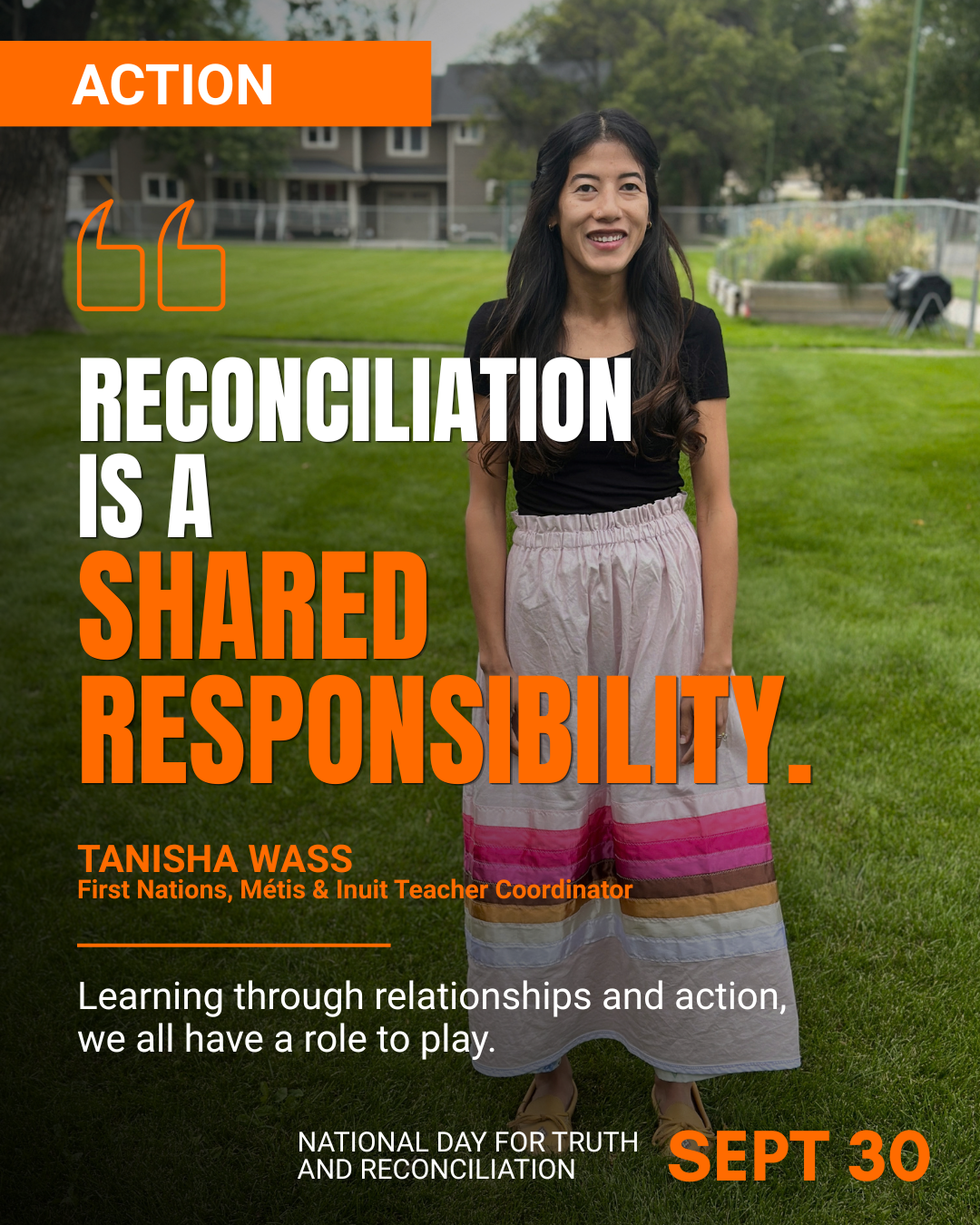
For Indigenous Education Coordinator Tanisha, reconciliation is deeply personal. As the granddaughter of a Residential School Survivor and someone whose family was impacted by Métis scrip, her understanding has been shaped by family experiences, culture and community.
"Because of this, I understand reconciliation as ongoing, relational work grounded in truth, accountability, healing, and creating something better for future generations," she shared.
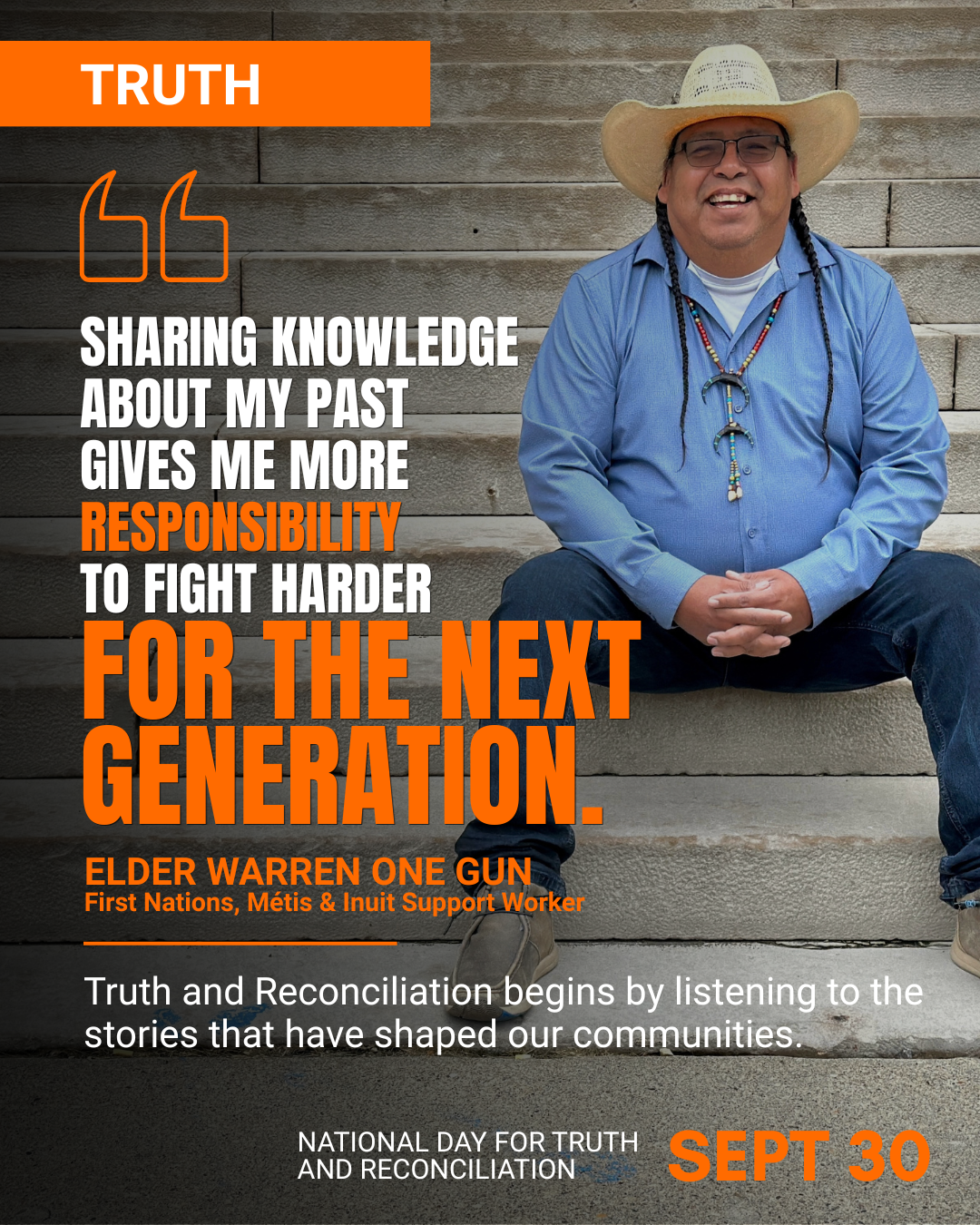
Those themes of healing and hope are echoed by Elder Warren One Gun, FNMI Support Worker, who speaks openly about being a survivor of residential schools and a descendant of intergenerational trauma.
"Sharing knowledge about my dark past gives me more responsibility to fight harder for the next generation," he said. "I hope and pray to see our children born into a community of love."
Across the team, there is a shared belief that meaningful reconciliation begins with understanding the truth of Canada's history while creating spaces where Indigenous students feel seen, valued and connected.
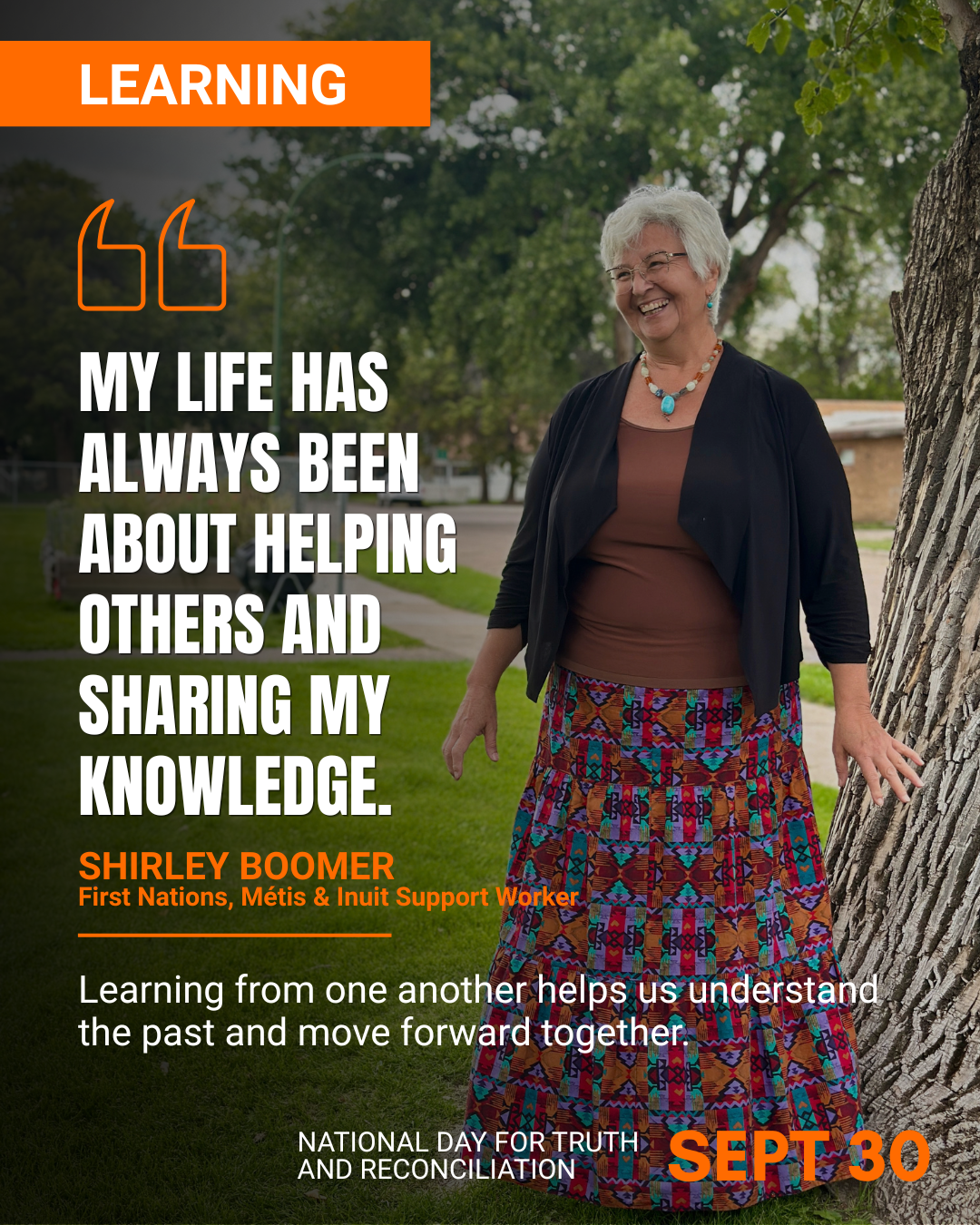
"My hope for all Indigenous students is for them to be proud of their roots and willing to learn more of their history," said Shirley Boomer, First Nations, Métis and Inuit (FNMI) Support Worker.
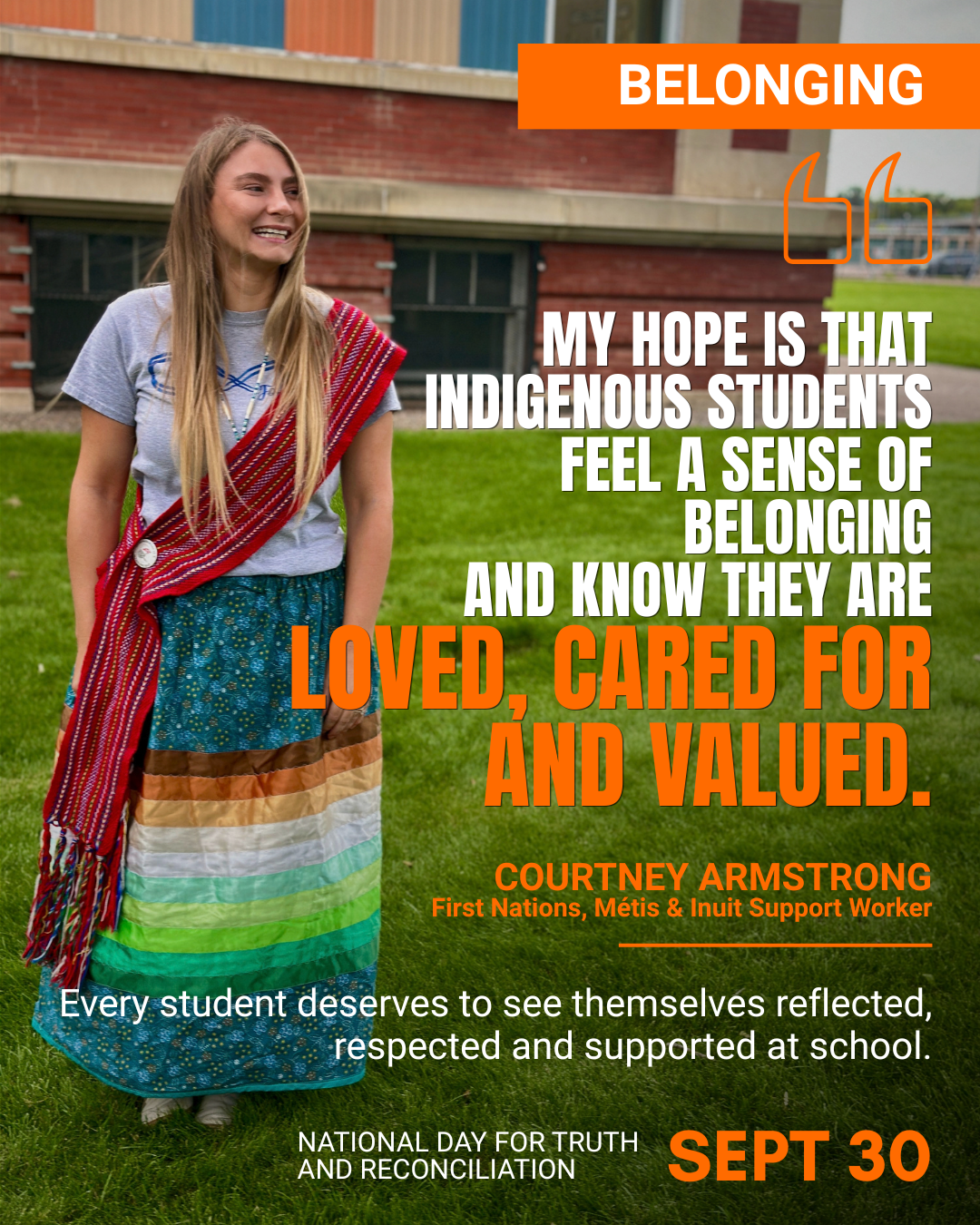
Similarly, Courtney Armstrong, FNMI Support Worker shares, “my hope is that Indigenous students feel a sense of belonging in our schools and know they are loved, cared for and valued."
The team's work extends beyond teaching historical facts. It focuses on building relationships with students, families, Elders, Knowledge Keepers and communities while helping educators develop the confidence and understanding to weave Indigenous perspectives into everyday learning.
For Tanisha, meaningful reconciliation means moving beyond singular lessons and ensuring Indigenous education becomes part of the daily learning in schools. Warren sees reconciliation as creating allies through education and understanding, while Shirley speaks of the importance of sharing knowledge and supporting others.
Together, these perspectives reinforce an important message: reconciliation is a shared responsibility.
As students participate in learning activities leading up to September 30, the FNMI Education team hopes the lessons extend far beyond a single week.
"I hope students take this knowledge and understand that reconciliation is something we all have a role in," said Courtney. "I hope they continue to learn, ask questions, build relationships and use what they learned beyond this week."
Warren shares a similar message, encouraging students to carry forward "honour, hope, humility and humbleness" while continuing to learn about Indigenous histories and experiences throughout the year.
For MHPSD, the path toward reconciliation is not marked by a single event or date on the calendar. It is built through ongoing conversations, meaningful relationships, truth telling, empathy and a commitment to creating school cultures where every student feels they belong.
As September 30 approaches, the First Nations, Métis and Inuit Education team invites students, staff and families to reflect on their own role in reconciliation and consider how they can continue learning, listening and walking forward together.